From a Friend’s Floor to a Working App
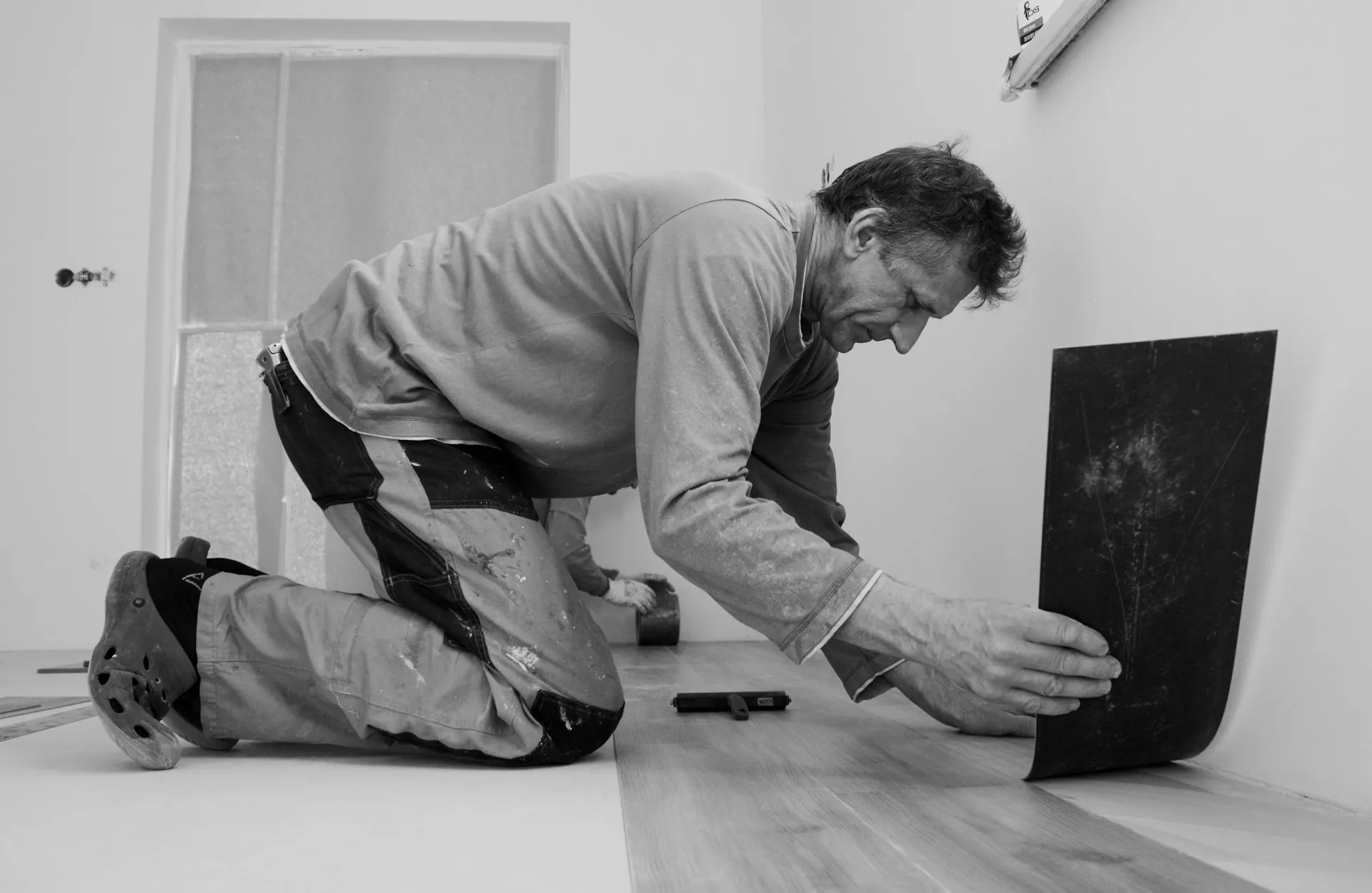
Some apps start with a product roadmap. This one started with a friend on his knees in an empty house, tape measure in hand, trying to figure out how many tiles he’d need for the floor.
He had just bought the place. And like everyone who has ever tiled a room, he was doing the same arithmetic on the back of an envelope that people have done for decades: room length times width, tile size, how many whole tiles fit, how many need cutting, how much extra to buy because cuts go wrong and tiles break. Then doing it again for the next room. Then wondering whether a diagonal layout would look better — and realizing that changes all the numbers.
Now, to be fair: there are mobile apps for this. Plenty of them. He could have gone to an app store, scrolled past the ads, picked one, installed it, granted it whatever permissions it wanted, used it for twenty minutes — and then let it sit on his phone forever, or hunted it down later to uninstall it.
That’s the part that bothered me. He needed a calculation, and the price of admission was an installation. For a task you’ll do once, maybe twice in a decade, that trade has never made sense. Watching him, I had one of those passing thoughts: why isn’t this just a page in the browser? Open it, use it, close the tab, done.
Normally that’s where it ends. A passing thought, filed away, forgotten by dinner. Building it would have cost a weekend I didn’t have. But that cost is exactly what changed — and this is the story of what happened instead.
The idea, in a sentence
A tool where you enter your rooms, your tile size, and your layout pattern — and it shows you the layout on a canvas and tells you exactly how many tiles to buy.
That’s it. Small and sharp. If you can explain it in a sentence, it probably makes a great app.
Building it with Claude
I didn’t open a blank editor and start typing. I opened a conversation.
I described what I wanted in plain language: rooms with a name, length, and width. Tile dimensions and a grout gap. Straight, diagonal, and herringbone patterns. Full tiles drawn in green, cut tiles in orange, so you can see where the saw comes out. A purchase estimate with a wastage allowance on top, because no real-world tiling job survives contact with zero spare tiles.
Claude scaffolded it, and then we iterated. The geometry was the interesting part — a straight grid is easy, but a diagonal layout rotated 45° to the walls needs genuinely accurate full-versus-cut tile detection, and herringbone’s interlocking shape earned itself a calculation-only estimate with a minimum 15% wastage rather than a misleading drawing. Each of those decisions came out of the back-and-forth: describe, review, correct, again.
Not “AI-assisted” in the autocomplete sense. A conversation, then a working app.
The fine-tuning is where you earn it
I’d be lying if I said the agent did everything. The last stretch was mine: the fine tunings, the final touches, the “no, again” moments. For this app, that meant the styling — the spacing, the colors, the way the canvas and the settings panel sit together, the small visual decisions that separate a tool that works from a tool that feels finished. The agent got the geometry right long before the app looked right.
Taste matters more than syntax here. The agent does the typing; you decide what good feels like.
And one principle survived every iteration untouched: everything runs locally in your browser. No input is sent anywhere, nothing is stored. A calculator should calculate, not collect.
Why the browser, not the app store
This is the conviction underneath XAPPLAXY, and the Floor Tiling Planner is a clean example of it: small things don’t deserve installations.
A tile calculator, a unit converter, a puzzle for a train ride — these are tools you reach for in a moment and put down when the moment passes. The mobile-app model asks too much of them: a download, storage, permissions, updates, an icon competing for space on your home screen. The browser model asks exactly the right amount: a URL. It works on your phone at the tile shop and on your laptop at home. Nothing to install, nothing to uninstall, nothing quietly phoning home.
That’s what an xapp is. Not an app you own, an app you visit.
The bigger thought
My friend’s floor got tiled either way. But the gap I tripped over that afternoon — the envelope arithmetic everyone redoes, the layout you can’t picture until the tiles are already bought — that gap is now filled, for anyone, one tab away.
That’s the whole pattern. The bottleneck is no longer can you build it. It’s did you notice the idea worth building. The noticing is deeply human; it comes from your work, your weekends, a friend’s new house. Agentic development just cleared everything standing between the noticing and the thing.
And this galaxy has room. If you’ve ever caught yourself thinking there should be a simple page for this — a calculator for your trade, a planner for your hobby, a small tool you’d rather visit than install — that’s an xapp waiting to exist, and we’d love for you to build it with us.
Somewhere, someone you know is measuring a floor. Bring the idea you keep almost forgetting.