Something worth thinking about first is how we think in the first place.
Most of the ideas we cherish don’t start as videos, they start as thoughts. Abstract notions that linger, expand, sometimes just sit there nagging at the back of our minds until we can’t ignore them anymore.
Mine began one night with an odd analogy:
Black holes compress matter into points of infinite density. Technology compresses capability into devices smaller than our hands. And somehow, we—humans—fall inward alongside both.
That thought wasn’t about physics or gadgets per se—it was about compression and pull. How the universe and human culture share an uncanny pattern: the phenomenal collapsing into the accessible, the immense becoming intimate.
The question, then, wasn’t what I thought—but how to share it.
Writing it down was easy in comparison.
Text Is the Medium of Thought
I started with ChatGPT to articulate the analogy more clearly:
- What does cosmic compression really imply?
- How is technological miniaturization similar, and where does it diverge?
- How are we influenced, not just the tech itself?
That text became more than content—it became a foundation, a narrative framework.
Most creators skip this phase at their peril. If your idea isn’t clear on paper, it won’t be clear in pixels or sound either. The transcript—the draft essay—was my source artifact.
But then came the real challenge:
Could I turn that essay into a compelling visual experience?
NotebookLM: Not Magic, but a Partner
I didn’t choose NotebookLM because it makes videos automatically.
I chose it because it treats my text as the authority.
Too many AI tools treat the prompt as a blank slate—generating output that sounds plausible but may drift far from your intent. NotebookLM is different: you give it a document, and it responds in the context of that document. It becomes an interpreter, not an innovator.
In other words:
You don’t ask it to invent your narrative.
You ask it to realize your narrative.
That subtle shift in how I interacted with the tool made all the difference.
How the Workflow Worked
Here’s what actually happened:
-
Write the narrative. The essay became my single source of truth.
-
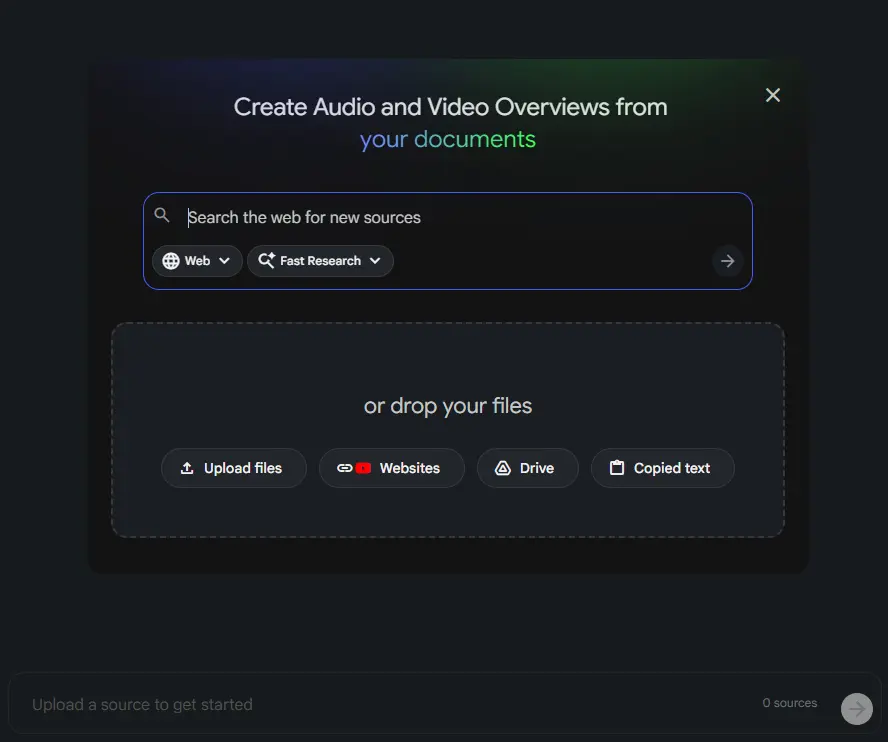
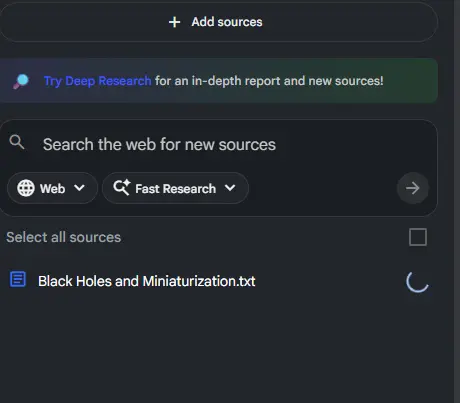
Create a notebook in NotebookLMand.
-
Upload the document into it.
Define the intent for the video. I didn’t say “make a video.” I said:
-
Cosmic compression should feel spatial and heavy.
-
Miniaturization should feel rapid and bright.
-
Human engagement should feel intimate.
-
Title of the video is “Electronic Evolution – A Black Hole in Your Pocket”
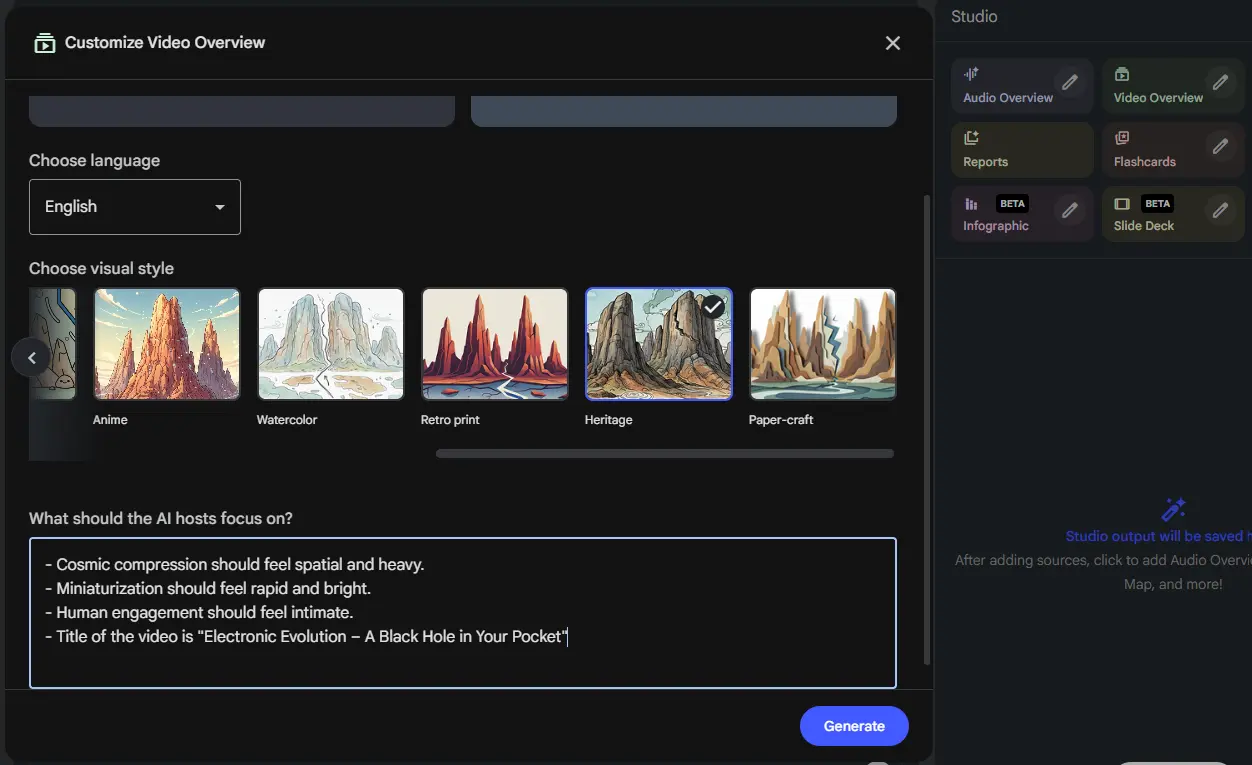
NotebookLM parsed these as instructions grounded in my text, not wild prompts. The result wasn’t an AI video that “guessed” my meaning—it was a video informed by my writing.
What Surprised Me Most
- The Video Felt Like My Voice
Not in the superficial sense of narration, but in structural intent. It carried the same rhythm, the same emphasis, the same tension between the cosmic and the personal.
- The Tools Didn’t Write My Thought
They translated it.
That’s an important distinction.
A lot of people mistakenly expect AI tools to create ideas. They can’t. Ideas come from you. AI can express them—but only if you lead it with clarity.
NotebookLM was useful because it understood context in depth, not just language fragments.
What I Learned (That You Might Want to Know Too)
-
Write first, automate later. You can’t visualize what you can’t articulate.
-
AI is a collaborator, not a replacement. Tools like NotebookLM thrive when they augment your clarity—not when they replace your intent.
-
Intent matters more than output. If your video strategy is clear, NotebookLM can help you shape it. If your strategy is vague, the result will be vague too.
And perhaps the deeper lesson:
Compression happens in thinking before it ever happens in technology.
Just as black holes collapse vast space into dense points, and as smartphones compact computing into palms, your thoughts compress into words long before they become visuals on a screen.
The Real Takeaway
It isn’t that I used NotebookLM to make a video. It’s that I used NotebookLM to interpret my narrative into a new medium without losing its essence.
AI isn’t a tool to replace thought. It’s a lens to project it.
That’s why this video mattered—not because of the technology used to make it, but because the original idea needed to be shared.